What is platinum-cured RTV-2 silicone rubber
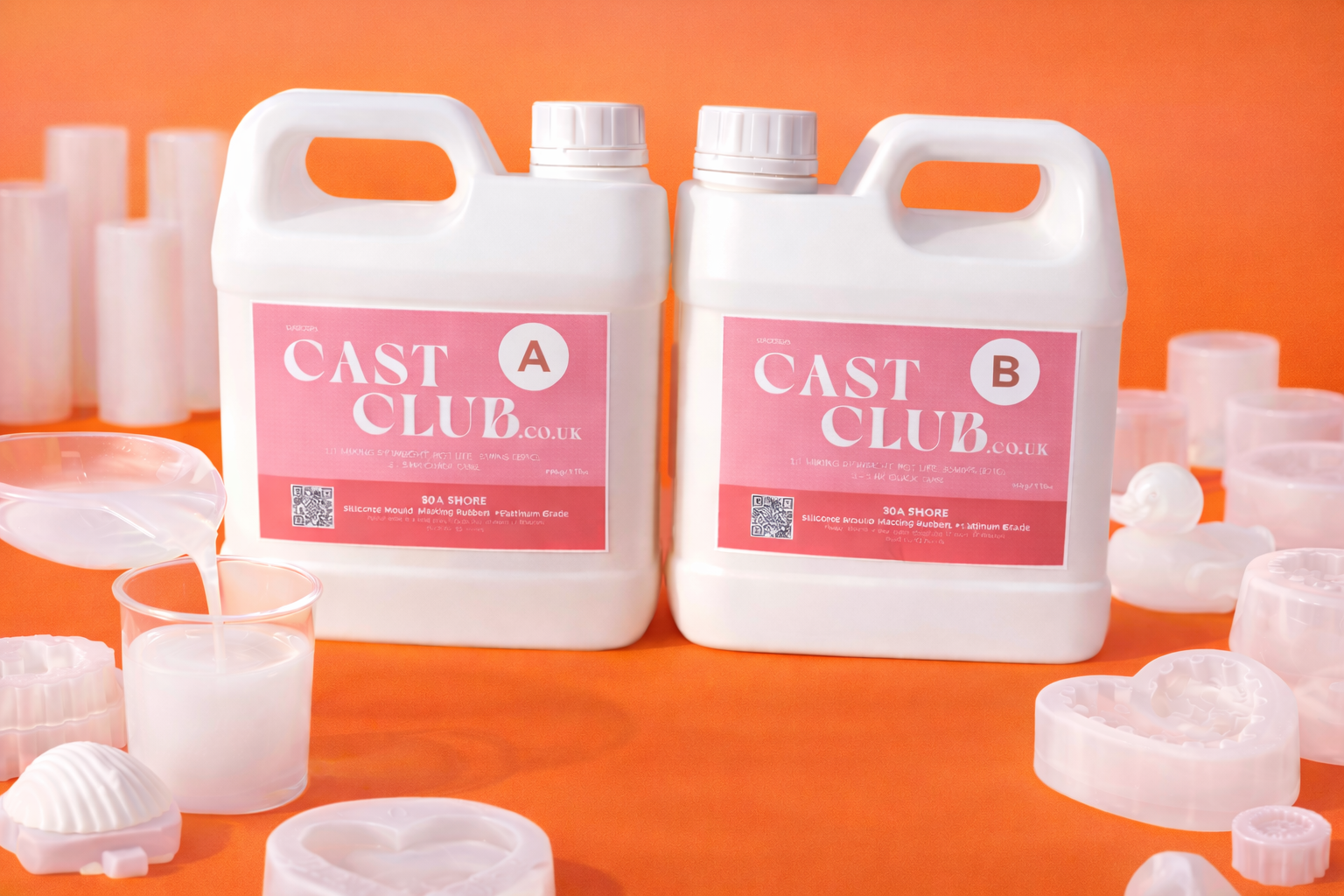
Your Guide to Flexible Mould-Making Materials**
Platinum-cured RTV-2 silicone rubber is one of the most reliable, flexible, and accurate mould-making materials available for craft and industrial use. Whether you’re casting jewellery, resin art, or prototype parts, it’s a material worth knowing and using.
RTV stands for Room-Temperature Vulcanizing silicone. It refers to silicone compounds that cure (harden) at normal room temperatures without heating. The “2” in RTV-2 tells you this is a two-part system — you mix the silicone base (Part A) with a curing agent or catalyst (Part B) to start the chemical reaction that turns it into rubber.
RTV-2 silicones are popular with makers because they:
✔️ Cure at room temperature
✔️ Produce flexible, durable moulds
✔️ Capture very fine detail
✔️ Are widely compatible with casting materials like resins and plaster
⚙️ What Platinum-Cured Means
Platinum-cured RTV-2 silicone uses a platinum catalyst (instead of other chemicals like tin) to activate the curing process. This has some real benefits:
🔹 Minimal shrinkage and high dimensional accuracy — your mould stays true to the original object.
🔹 No by-products released during cure — unlike some other cure systems, platinum addition-cure doesn’t generate unwanted chemicals as it sets.
🔹 Better durability and longer life — platinum systems generally resist tear and aging better than cheaper alternatives.
🔹 Safer and more stable for food/medical grade uses — that’s why platinum silicone is widely used in medical and food-contact products too.
In other words, platinum-cured RTV-2 silicone is a premium mould material that’s ideal for makers who want accuracy, longevity, and great performance.
🧠 How it Works (Simple Breakdown)
Part A + Part B: The two liquid parts are measured (usually 1:1 by weight) and mixed thoroughly.
Working Time: Once mixed, you have a window (often 30–40 mins) to pour or apply the silicone.
Curing: Over a few hours, the silicone cross-links to become a flexible rubber mould.
Demoulding: The mould can then be used repeatedly for casting resins, plaster, wax, or even food items in some formulations.
🪄 Why Makers Love Platinum RTV-2 Silicone
✨ Superior detail reproduction — tiny textures and patterns come through clearly.
✨ Flexible but strong moulds — easy to remove delicate cast parts.
✨ Broad temperature range — stays stable in hot or cold environments.
✨ Good release properties — many materials don’t even need a release agent.
It’s the go-to choice for toy makers, prop builders, craft resin artists, and even prototyping engineers.